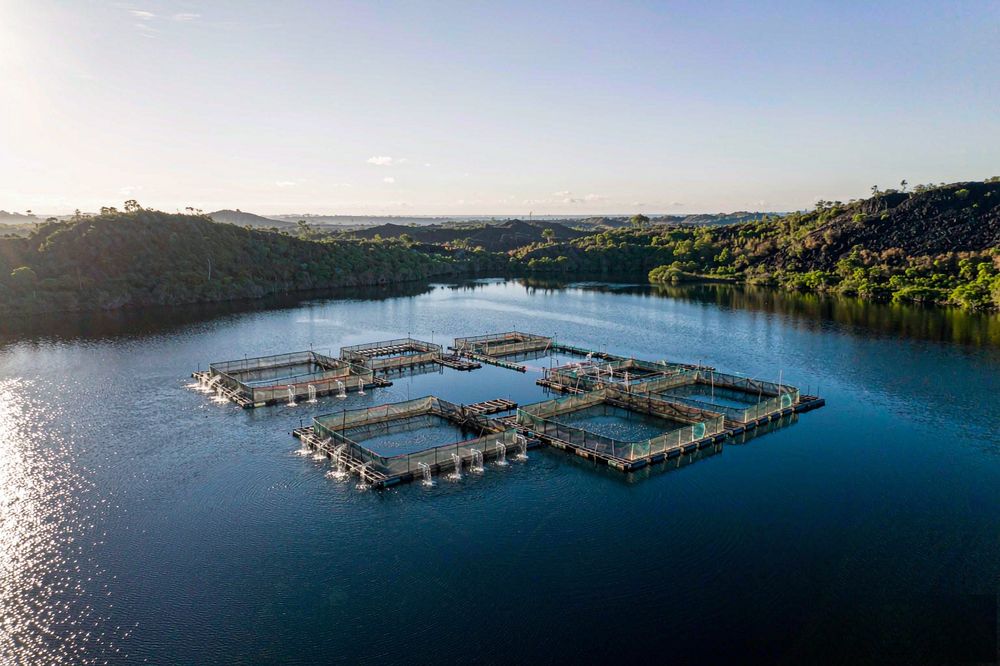
Sustainable Tilapia Sourcing in 2026: ASC & BAP Certification, Responsible Aquaculture, and a B2B Buyer’s Playbook
Sustainability has moved from a marketing claim to a baseline requirement in the global tilapia trade. In 2026, the Aquaculture Stewardship Council (ASC) and Best Aquaculture Practices (BAP) programmes are the two certifications that most clearly signal responsible production to retail buyers, foodservice chains, and import regulators. With the global tilapia market projected to expand from US$9.2–10.6 billion in 2025 to US$11.7–14.5 billion by 2033, according to Research and Markets, the share of production that meets independent sustainability audits is now a strategic variable for every B2B buyer. This article consolidates the latest data from FAO, GLOBEFISH, Rabobank, USSEC, and ASC’s own regional reports, and outlines a practical sourcing playbook for importers of frozen tilapia whole fish, fillets, and pangasius.
Three structural forces are reshaping the 2026 sourcing map. First, the ASC Tilapia Standard and the BAP four-star chain are increasingly demanded by EU and US foodservice tenders, making certification a precondition rather than a premium. Second, country origins are diverging: producers in Brazil, Indonesia, Honduras, and Mexico are scaling up ASC-certified volumes, while Chinese export supply remains dominant on volume but occupies a mixed-quality position. Third, sustainability now lives in documentation — chain-of-custody, traceability, and audit-ready records are what turn a brand claim into a verifiable claim. NEGUPGROUP SEAFOOD supplies into this environment with HACCP, ASC chain-of-custody, and BAP-capable processing.
The 2026 Inflection Point: Why Certification Now Drives Trade Flows
FAO’s State of World Fisheries and Aquaculture (SOFIA) work and GLOBEFISH’s 2026 tilapia note both point to the same conclusion: aquaculture is the fastest-growing food production sector globally, and within aquaculture, species with credible sustainability schemes are gaining price premiums and shelf access. Tilapia is a textbook example. More than 1,700 aquaculture sites worldwide now carry ASC certification, covering roughly 2.5 million tonnes of annual output across species. ASC tilapia certifications — including Regal Springs’ Lake Toba farm (the first ASC tilapia farm in the world), Brazil’s Brasfish, Agrofish, Geneseas, and integrated cooperatives such as C.Vale, which recently renewed ASC certification for a third consecutive year across 22 integrated farms in nine municipalities — anchor this transformation. GLOBEFISH tilapia briefs in 2026 continue to flag that traditional Asian tilapia supply growth has slowed, while certified Latin American and African volumes are scaling up to fill the EU/UK gap.
ASC and BAP are not interchangeable. ASC evaluates the farm itself against a single, performance-based standard covering biodiversity, feed, pollution, disease management, and human rights. BAP uses a star system across the chain — farm, plant, hatchery, and feed mill. Buyers should match the scheme to their regulatory exposure and retail customer requirements rather than treating either as a generic “sustainability label”.
Mandatory biodiversity impact assessment, no wetland conversion since 1999, fish-escape trapping
ILO-aligned: no child/forced labour, freedom of association, fair wages
NEGUPGROUP SEAFOOD | WhatsApp +86 13360658417 | [email protected] | www.negupgroup.com
Global Tilapia Production in 2026: Who Leads, Who Is Shifting
Rabobank and USSEC’s 2026 tilapia assessments show a globally expanding but uneven production map. Total global tilapia production is forecast to grow about 3% in 2026, led by Southeast Asia, Africa, and Latin America. China’s production is essentially flat (0–1% growth) at around 2.05 million tonnes as producers pivot toward higher-value species. Indonesia is forecast to grow 4% to roughly 1.6 million tonnes, supported by lower US tariffs and aggressive EU expansion. Nigeria’s tilapia sector is forecast to grow 29% in 2026 after a 40% leap the previous year. Brazil just crossed the 500,000-tonne threshold in 2025 and is forecast to grow another 2% in 2026, supported by ASC adoption. Mexico is projected at 11% growth on robust domestic demand.
The table below summarises the 2024–2026 outlook for the major Asian producers and the global market value, drawing on USSEC data presented at the GSA Responsible Seafood Summit, Rabobank’s 2026 outlook, and Research and Markets estimates.
ASC certified: Brasfish, Agrofish, Geneseas, MCassab; C.Vale cooperative
Sources: USSEC 2026 forecasts presented at the GSA Responsible Seafood Summit; Rabobank Global Aquaculture Update 2026; Research and Markets 2025 global tilapia report; INFOFISH Tilapia 2025 conference materials; ASC regional reports 2026.
Three regional clusters now dominate the certified supply map. In Latin America, Brazil is the most credible regional hub for ASC tilapia. Beyond the standalone ASC-certified farms — Brasfish (ASC00794), Agrofish (ASC01543), MCassab (ASC01912), and the audited Geneseas — Brazil’s integrated cooperatives are setting the pace. C.Vale, which operates 22 integrated farms across nine municipalities, renewed its ASC certification for the third consecutive year in 2026, demonstrating that integrated cooperative models can scale ASC compliance at the small-farmer level. This model is now being studied by African and Indonesian producers.
Indonesia is the second certified supply hotspot after more than a decade of ASC leadership from Regal Springs’ Lake Toba operation. The country’s Ministry of Marine Affairs and Fisheries has identified Nile tilapia as a priority export commodity and is investing in saline-tolerant cultivation (BINS Karawang) and Java north-coast pond revitalisation. Officials highlight a zero-rejection export record, with one producer now supplying a UK pub chain. This documented access is what allows certified Indonesian tilapia to compete head-to-head with cod and trout on European whitefish shelves.
China remains the world’s largest producer and exporter, with 2026 projected volume of about 2.05 million tonnes and exports of approximately 1.15 million tonnes. However, its share of certified tilapia remains modest: most major Chinese processors operate HACCP and BAP programmes, and ASC coverage is expanding but still selective. For buyers that need scale and a basic compliance baseline, Chinese supply remains foundational; for buyers that need ASC logos specifically, Chinese supply is a complement to certified Latin American and Indonesian volumes, not a substitute.
NEGUPGROUP SEAFOOD | WhatsApp +86 13360658417 | [email protected] | www.negupgroup.com
Sustainability requirements should now be embedded directly into the supplier qualification process, not added on at the contract stage. We recommend five concrete steps for importers and distributors:
Tie certification to retail or tender requirement. If your downstream buyer requires the ASC or BAP logo on-pack, the certificate number must be verifiable on ASC’s or GSA’s public registry, not just claimed in a brochure.
Diversify origin across at least two certified regions. Indonesian and Brazilian ASC tilapia offer resilience against single-origin shocks (disease, tariff, geopolitical). Chinese supply can fill scale gaps but should not be the only certified source for EU-tender contracts.
Require chain-of-custody certification at the processor level. Without CoC at the processing plant, the ASC or BAP logo cannot legally appear on retail packs. NEGUPGROUP SEAFOOD sources from processors with ASC CoC, BAP, HACCP, and Halal as needed.
Audit documentation before each shipment. Certificate validity, audit-date freshness, mass-balance records, and traceability documents should be checked per lot. Stale certificates are a common reason for shipment holds.
Match product form to certified capability. Most ASC tilapia is currently available as whole-fish frozen in 300–800g+ grades and IQF fillets in 3–5oz and 5–7oz skin-on/skinless formats; 10kg/carton export packaging is standard for both forms.
NEGUPGROUP SEAFOOD: How We Support Certified Tilapia Sourcing
NEGUPGROUP SEAFOOD is an export-side B2B supplier of frozen whitefish from China, with HACCP-registered processing plants and a focus on traceable, certification-ready product. Our standard export portfolio for 2026 includes:
Frozen Tilapia Whole Fish: 300–500g, 500–800g, and 800g+, IQF or block frozen, 10kg/carton
Frozen Tilapia Fillet: 3–5oz and 5–7oz, skin-on or skinless, IQF, 10kg/carton
Frozen Pangasius Fillet: 3–5oz well-trimmed, IQF, 10kg/carton
We coordinate container-mix planning with certified Latin American and Indonesian partners for buyers that need full ASC coverage on-pack.
NEGUPGROUP SEAFOOD | WhatsApp +86 13360658417 | [email protected] | www.negupgroup.com
A two-page summary of ASC vs BAP differences, 2026 producer-country data, certified-origin mapping, and a qualification checklist for B2B buyers.
ASC and BAP are now baseline entry tickets into EU/UK retail and US foodservice tenders, not optional claims.
Brazil and Indonesia lead on ASC tilapia volume and certification rigour; China leads on scale and BAP-broad compliance.
Chain-of-custody certification at the processing plant is what makes a logo legally usable on-pack — verify the certificate ID at the source.
Documentation, traceability records, and mass-balance workflow are now as commercially valuable as the certificate itself.
Buyers that diversify across two certified origins reduce concentration risk in a tariff-volatile year.
Talk to us about certified frozen tilapia whole fish, fillets, and pangasius supply for H2 2026. We support container-load planning across certified origins and can pre-clear documentation for first-time importers.
CTA: Request Quotation | Ask for Samples | Check Product Specifications | Contact NEGUPGROUP Seafood Team
NEGUPGROUP SEAFOOD | WhatsApp +86 13360658417 | [email protected] | www.negupgroup.com
Talk to the NEGUP trading desk — quotes within 24 hours.
Contact NEGUP Foods